Understanding Fishing Pole Guide Size Charts
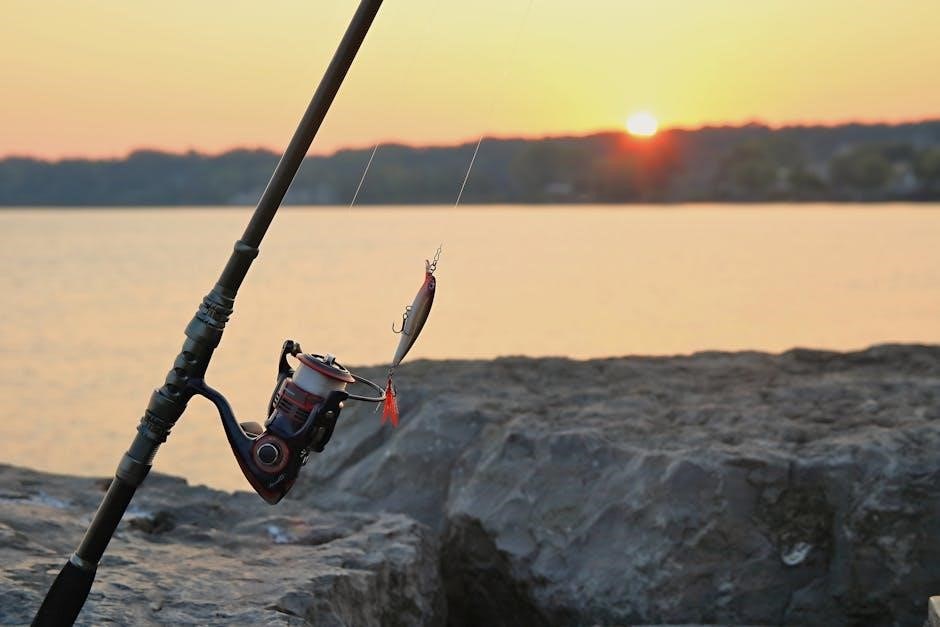
Fishing pole guide size charts are essential tools for anglers and rod builders, detailing optimal guide dimensions for various rod characteristics and fishing applications.
What is a Fishing Pole Guide Size Chart?
A fishing pole guide size chart is a comprehensive reference tool used to determine the appropriate diameter and placement of guides along a fishing rod’s blank. These charts aren’t simply lists of numbers; they represent a carefully calculated system based on factors like rod power, action, and the type of fishing line intended for use.
Essentially, the chart correlates the rod’s specifications with the ideal guide sizes, ensuring smooth casting, optimal line flow, and minimized friction. Charts typically present a series of guide sizes, starting with the largest first guide closest to the reel seat, and progressively decreasing in size towards the rod tip. Understanding these charts is crucial for both custom rod builders and anglers looking to re-guide existing rods for improved performance.
Why Guide Size Matters for Performance
Correct fishing guide size dramatically impacts casting distance and accuracy, reducing friction as line travels through them. Undersized guides create excessive friction, hindering line flow and potentially damaging the line itself, leading to reduced casting distance and increased fatigue. Conversely, oversized guides add unnecessary weight and can negatively affect rod sensitivity.
Properly sized guides also distribute stress evenly along the rod blank during a fight with a fish, preventing potential breakage. They contribute to better lure control and hookset power, especially when using different lure types like jigs or treble-hooked baits. Ultimately, selecting the right guide size optimizes the rod’s overall performance, enhancing the angler’s experience and success rate.
Key Components Affecting Guide Size
Rod power, rod action, and line weight are crucial factors determining appropriate guide size; each element significantly influences how a rod bends and performs.
Rod Power and its Influence
Rod power describes the amount of force needed to bend the rod, ranging from ultra-light to extra-heavy. Heavier power rods require larger guides to manage thicker lines and withstand the stress of larger fish. Conversely, lighter power rods, designed for finesse techniques and smaller species, utilize smaller, more sensitive guides.
The relationship is direct: increased power necessitates increased guide size to efficiently dissipate line stress and prevent damage to the rod blank. A rod’s power dictates the range of lure weights it can effectively cast and retrieve. Selecting guides appropriate for the rod’s power ensures optimal casting distance, accuracy, and fish-fighting capability. Ignoring this connection can lead to poor performance and potential rod failure, especially when targeting powerful species.
Rod Action and its Role
Rod action refers to where the rod bends along its length – slow, moderate, fast, or extra-fast. Faster action rods bend primarily near the tip, requiring smaller running guides to maintain sensitivity and control. Slower action rods bend more throughout the blank, demanding a more gradual tapering of guide sizes to distribute stress evenly.
Action influences how quickly a rod recovers after a cast or hookset; Faster actions benefit from smaller tip guides for enhanced sensitivity, while slower actions need larger tip guides for smoother line flow. Guide size must complement the action to optimize casting distance, lure presentation, and hooksetting power. Mismatched action and guide size can result in reduced casting efficiency and diminished fish-fighting performance.
Line Weight and Type Considerations

Line weight and type significantly impact guide size selection. Heavier lines necessitate larger diameter guides to minimize friction and prevent line damage during casting and retrieves. Braided lines, known for their low stretch and high strength, often require guides with smoother ceramic inserts to dissipate heat generated by rapid line movement.
Monofilament and fluorocarbon lines, while less abrasive, still benefit from appropriately sized guides to ensure efficient energy transfer. The chart must account for the line’s diameter and material properties. Using undersized guides with heavier lines can cause friction knots and reduce casting distance, while oversized guides with lighter lines can diminish sensitivity and accuracy.

Decoding Guide Size Terminology
Guide size terminology utilizes a numbering system, often referencing the Inner Diameter (ID), to categorize guides based on their ability to accommodate different line diameters and rod specifications.
First Guide Size: Importance and Selection
The first guide, positioned closest to the reel seat, is arguably the most critical guide on the rod, significantly impacting casting distance and line flow efficiency. Its larger diameter must smoothly transition the line from the reel spool onto the smaller running guides. Incorrect sizing can create friction, reducing casting distance and potentially damaging the line.
Selecting the correct first guide size depends heavily on the spool capacity of the reel and the line weight being used. Generally, larger reels and heavier lines necessitate larger first guides. A common rule of thumb suggests the first guide’s ID should be approximately 2-3 times the diameter of the fishing line. Consider the blank’s outer diameter near the reel seat; a wider blank requires a larger first guide to avoid line slap against the rod itself. Precise measurements and consulting established guide size charts are crucial for optimal performance.
Running Guide Sizes: Tapering and Function
Running guides, extending from the first guide towards the tip, are meticulously sized in a tapering sequence to efficiently manage line flow and distribute stress. This tapering minimizes friction and prevents line tangles during casting and retrieves. The diameter of each subsequent guide progressively decreases, smoothly guiding the line towards the tip.
The tapering rate isn’t linear; it’s often adjusted based on rod action and intended line weight. Faster action rods typically require a more aggressive taper, while slower action rods benefit from a gentler decline in guide size. Proper spacing between running guides is also vital, generally following a formula based on the rod’s length and bend characteristics. Incorrectly spaced or sized running guides can lead to reduced casting distance, poor sensitivity, and increased line wear.
Tip Guide Size: Sensitivity and Line Control
The tip guide, being the final point of contact with the line, plays a crucial role in both sensitivity and precise line control. It must be small enough to avoid adding unnecessary weight to the rod tip, which would dampen sensitivity and hinder the detection of subtle strikes. However, it also needs to be large enough to allow the line to pass through smoothly without creating friction or potential damage.
Selecting the correct tip guide size involves balancing these competing factors. Generally, smaller tip guides are preferred for finesse techniques and lighter lines, while slightly larger guides are suitable for heavier lines and more aggressive presentations. The material of the tip guide also impacts performance; ceramic inserts minimize friction and heat buildup, protecting the line from damage during prolonged fights.

Popular Guide Size Charts by Fish Species
Guide size charts vary significantly based on target species, encompassing bass, saltwater, and fly fishing, each demanding specific guide configurations for optimal performance.
Bass Fishing Guide Size Recommendations
For bass fishing, guide selection hinges on lure weight and line type. Generally, a moderate power rod utilizing monofilament or fluorocarbon lines benefits from larger diameter guides, typically ranging from size 16 to 20 for the first guide, tapering down to smaller sizes (6-8) near the tip. When employing braided lines, which have a smaller diameter, smaller guide sizes – perhaps 12 to 16 initially – are preferred to prevent line slap and maintain casting distance.
Fast-action bass rods often utilize a slightly smaller guide train overall, prioritizing sensitivity. Consider the specific bass fishing technique; Texas rigs and jigs, demanding solid hooksets, pair well with faster actions and corresponding guide sizes. Crankbaits and spinnerbaits, utilizing treble hooks, benefit from moderate action rods and a guide train designed to cushion the lure’s movement, enhancing casting distance and reducing stress on the line.
Saltwater Fishing Guide Size Chart
Saltwater fishing demands robust guides capable of withstanding harsh conditions and powerful fish. Heavier line weights common in saltwater necessitate larger guide diameters. For inshore saltwater fishing targeting species like redfish and speckled trout, a typical setup might start with a size 20 or 25 guide, tapering down to sizes 8 or 10 at the tip. Offshore applications, pursuing larger gamefish like tuna or marlin, require significantly larger guides – sizes 30 to 40 for the first guide, and progressively smaller sizes down the blank.
Braided line is prevalent in saltwater; therefore, guide selection must account for its minimal stretch and potential for line slap. Stainless steel or SiC guides are highly recommended for their durability and heat dissipation when battling powerful fish; Always consider the rod’s power and action when choosing guide sizes, ensuring a smooth transition throughout the guide train.
Fly Fishing Guide Size Chart
Fly fishing guide sizing differs significantly from conventional tackle, prioritizing sensitivity and delicate presentation. Fly rods typically utilize smaller, lightweight guides due to the lighter lines and flies used. A common guide setup for a 9-foot, 5-weight fly rod might begin with a size 16 or 18 stripping guide, followed by a series of smaller running guides in the 8 to 12 range, culminating in a tiny size 4 or 6 tip guide.
Ceramic or SiC guides are preferred for their smooth surfaces, minimizing friction and maximizing casting distance. The taper of the guide train is crucial for efficient energy transfer. Precise guide placement and sizing are vital for maintaining line control and delicate presentations essential in fly fishing.

Materials Used in Fishing Guides
Fishing guides are constructed from diverse materials like ceramic, stainless steel, and silicon carbide (SiC), each offering unique benefits regarding durability and performance.
Ceramic Guides: Durability and Heat Dissipation
Ceramic guides represent a significant advancement in fishing technology, prized for their exceptional durability and ability to dissipate heat generated by friction between the fishing line and the guide itself. This heat build-up is particularly crucial when using monofilament or fluorocarbon lines, as excessive temperatures can weaken the line, leading to potential breakage during a cast or while fighting a fish.
The ceramic inserts, often made of aluminum oxide or silicon nitride, significantly reduce friction, allowing for smoother line flow and increased casting distance. These guides are remarkably resistant to wear and tear, even with prolonged use and exposure to harsh saltwater environments. Their robust nature ensures a longer lifespan compared to traditional metal guides, making them a cost-effective choice in the long run. Furthermore, ceramic guides minimize line memory, contributing to improved sensitivity and overall fishing performance.
Stainless Steel Guides: Cost-Effectiveness
Stainless steel guides remain a popular choice for anglers seeking a balance between affordability and functionality, particularly in recreational fishing scenarios. They offer a compelling entry point for rod builders and anglers on a budget, providing reliable performance without the premium price tag associated with ceramic or silicon carbide options. While not possessing the same heat dissipation properties as ceramic guides, stainless steel exhibits good corrosion resistance, making them suitable for both freshwater and saltwater applications.

These guides are relatively durable and can withstand considerable wear, though they may exhibit increased friction compared to smoother materials. This friction can potentially lead to line wear over time, especially with braided lines. However, for many anglers, the cost savings outweigh this consideration, making stainless steel guides a practical and dependable option for a wide range of fishing styles.
Silicon Carbide (SiC) Guides: Premium Performance
Silicon Carbide (SiC) guides represent the pinnacle of fishing guide technology, offering unparalleled performance characteristics for serious anglers and rod builders. Renowned for their exceptional hardness and smoothness, SiC guides minimize friction, resulting in significantly reduced line wear, increased casting distance, and enhanced sensitivity. This smoothness is particularly beneficial when using superlines like braid, preventing heat buildup and maintaining line integrity.
SiC guides excel in heat dissipation, crucial when battling large fish that generate substantial line friction. Their durability ensures long-lasting performance, even under demanding conditions. While representing a higher investment compared to stainless steel or ceramic, the superior performance and longevity of SiC guides make them a worthwhile upgrade for anglers prioritizing optimal casting, sensitivity, and line protection.
How to Choose the Right Guide Size for Your Rod
Selecting appropriate guides involves matching them to blank specifications, considering your preferred fishing style, and consulting professional rod building resources for guidance.
Matching Guides to Blank Specifications
Precisely aligning guide sizes with your rod blank’s specifications is paramount for optimal performance. Begin by understanding the blank’s Inner Diameter (ID) at various points along its length; manufacturers often provide this data. Guide feet must fit snugly, without excessive force, to prevent damage or movement during casting and retrieval.
Consider the rod’s power and action – faster action rods generally require fewer, smaller guides, while slower action rods benefit from more, strategically placed guides. Tapering the guide sizes from the first guide (largest) down to the tip guide (smallest) is crucial for smooth line flow and reduced friction.
Incorrectly sized guides can lead to line slap, reduced casting distance, and increased wear on both the line and the guide itself. Always prioritize a secure, comfortable fit that complements the blank’s inherent characteristics for a truly responsive and efficient fishing setup.
Considering Your Fishing Style
Your preferred fishing style significantly influences optimal guide size selection. Anglers frequently casting long distances with lighter lures—like bass fishermen employing finesse techniques—benefit from guides designed to minimize friction and maximize casting efficiency. These often involve higher-quality, smoother materials like SiC.
Conversely, those targeting powerful species or utilizing heavier lines, such as saltwater anglers battling tuna or sharks, require robust guides capable of withstanding immense stress and heat. Stainless steel or reinforced ceramic guides are preferable in these scenarios.
Consider the types of knots you commonly use; larger knots necessitate wider guide inserts. Ultimately, tailoring guide size to your specific techniques and target species ensures peak performance and enhances your overall angling experience.
Professional Rod Building Resources
For in-depth knowledge and assistance with guide selection, numerous professional rod building resources are available. Mud Hole Custom Tackle ([https://www.mudholetackle.com/](https://www.mudholetackle.com/)) offers comprehensive guides, tools, and components, alongside expert advice. Batson Enterprises ([https://www.batsonenterprises.com/](https://www.batsonenterprises.com/)) provides detailed specifications for their rod blanks, including recommended guide layouts.
Online forums like “Rod Building Forum” ([https://www.rodbuildingforum.com/](https://www.rodbuildingforum.com/)) foster a community where experienced builders share insights and troubleshoot challenges. Consider attending rod building workshops or seminars offered by industry professionals to gain hands-on experience.
These resources empower you to make informed decisions, ensuring a custom-built rod perfectly suited to your fishing needs and preferences, maximizing performance and enjoyment.